For professional photo organizers

Four shoeboxes go in. A labeled, dated archive the whole family can search comes out.

PaperKeepsake holds every client archive project in one place, from intake inventory to the final index. You run the batches, the tags and the handoff without rebuilding a spreadsheet for each new family.

  • 412 US organizers run their client work here every week
  • Encrypted storage with per project access and revocable family links
  • First project live in 40 minutes, including your own batch naming rules
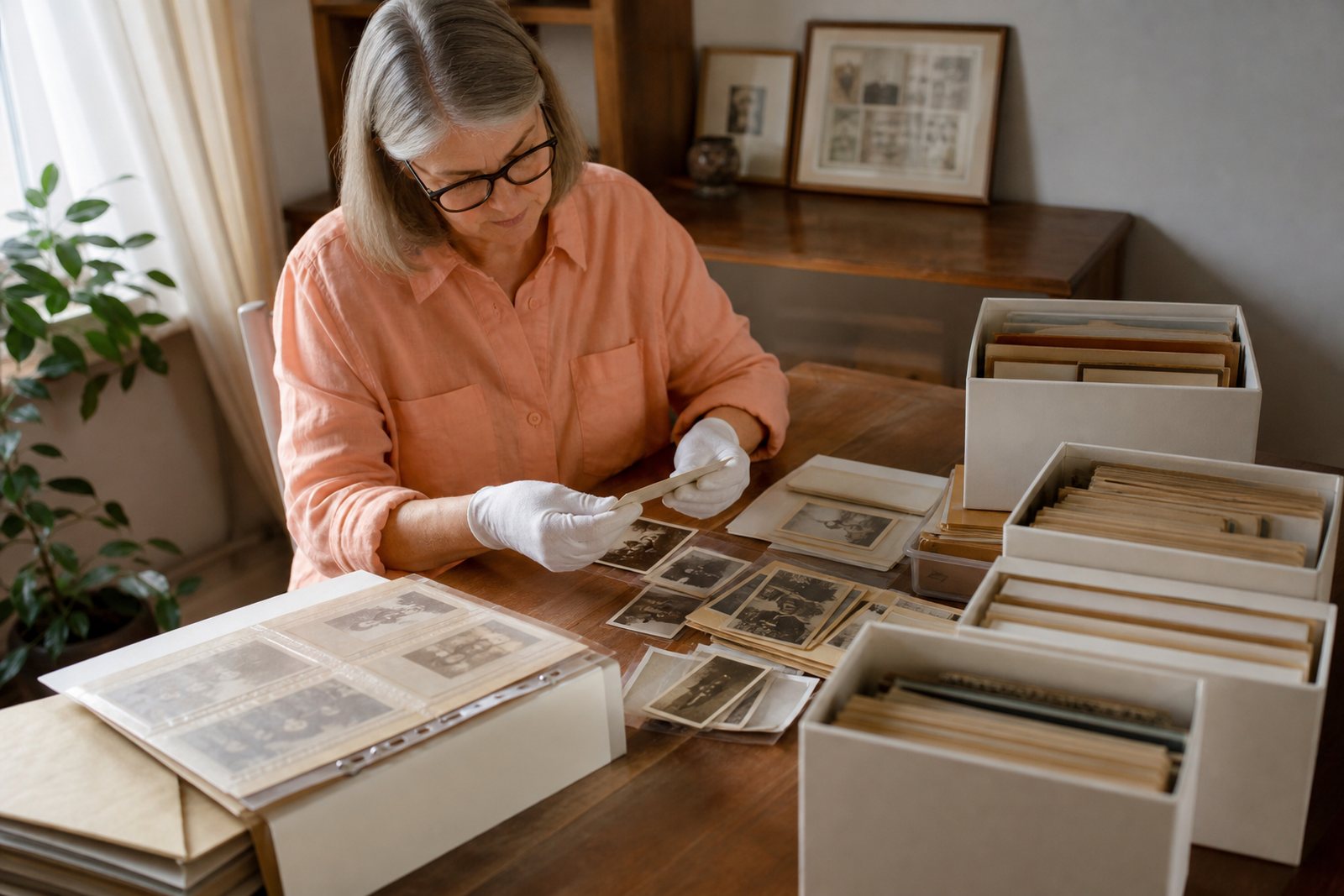
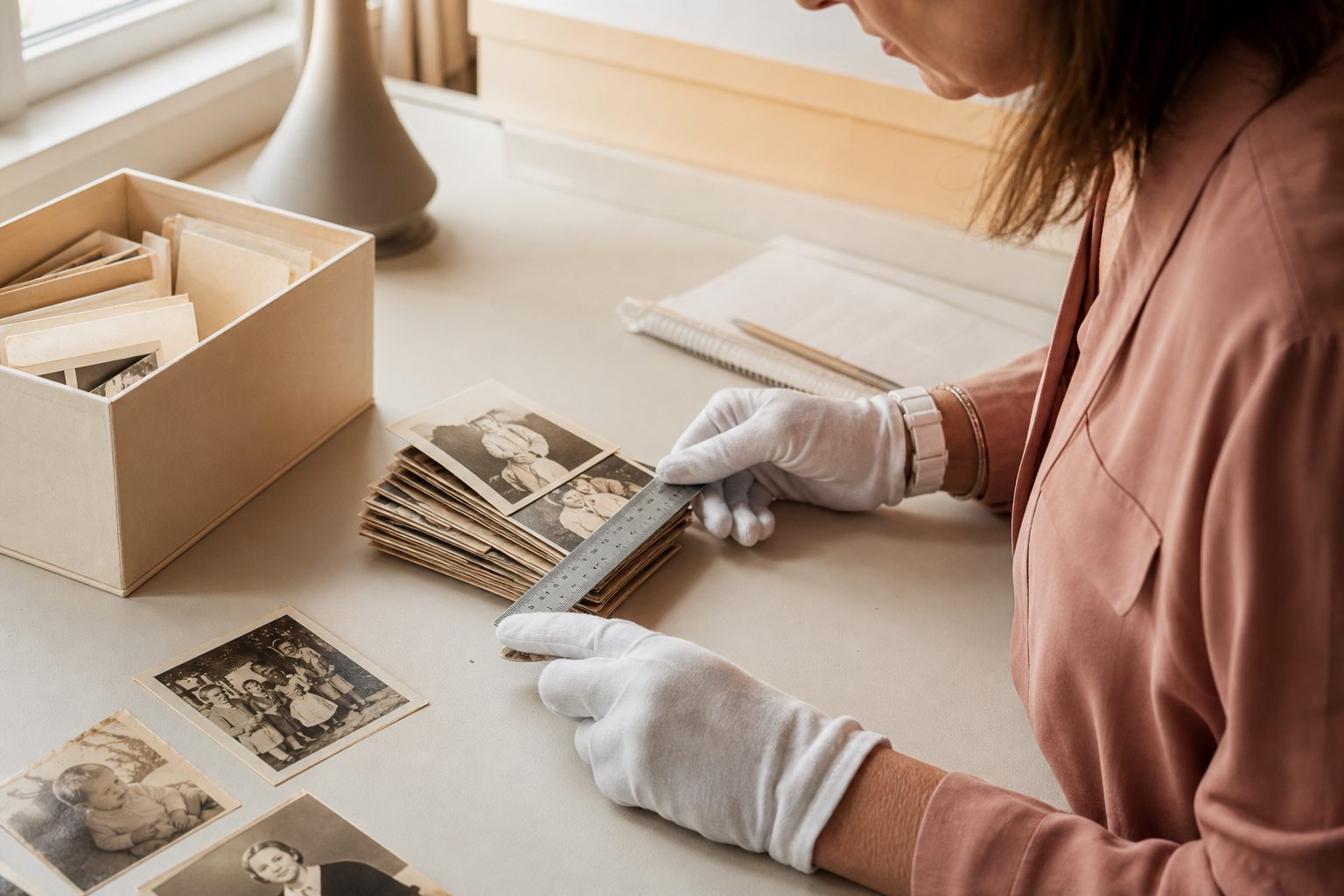
A professional photo organizer sorting loose family photographs into labeled archival boxes on a wide work table in warm window light
Intake day, four containers, one running inventory

The part nobody quotes for

The photographs are not the hard part. Keeping track of them is.

Sorting is the work you trained for. The hours that quietly eat a project are the ones spent remembering which box you were in, which scans came back crooked, and what the client's aunt said about the man in the fishing hat.

The inventory lives in three places at once

A legal pad on the table, a spreadsheet on the laptop, and your memory. When a client calls in the middle of a different job, you rebuild the picture from scratch before you can answer a two minute question.

Roughly 4 hours per project lost to relocating your own notes
Scanning batches drift out of order

A folder called Scans_final_2 arrives from the assistant and nobody can say which container it came from. Rescanning is the only safe answer, and rescanning is the most expensive mistake in this trade.

220 sheets rescanned is about $340 of billable time gone

Identification notes never make it into the files

The client names forty faces during one visit and you write it on sticky notes. Half of those names never reach the metadata, which means the archive you deliver is searchable by date but not by person.

The single most common reason a family asks for a redo

Delivery turns into a week of assembly

Building the final index by hand, checking counts against the intake sheet, exporting a version the adult children can open. It is unpaid production work at the end of every project, on the week you wanted to start the next one.

6 to 9 unbilled hours per completed archive

How it works

One project record, from the first container to the bound index

The structure follows the way the work already runs on your table. Nothing here asks you to change your sorting method or your labeling scheme.

  1. Open the project and log the containers

    Photograph each shoebox, album and envelope on intake, give it a container number and record counts, media types and condition notes. The client signs the same inventory you work from, so scope arguments end before they start.

  2. Run scanning as numbered batches

    Each batch is tied to a container, a scanner setting and an operator. Files land in a watched folder, get matched by barcode sheet or folder name, and any sheet that fails a quality check goes straight into a rescan queue instead of into the archive.

  3. Tag dates and people while the client is talking

    Person records are reusable across the whole family, and date ranges accept the honest answer: circa 1954, summer, or between two known events. Tags write into IPTC and XMP so the metadata travels with the file forever.

  4. Publish the family index and close the job

    One click builds a searchable index by person, decade, place and container, in a private web version and a print ready booklet. Counts reconcile against intake automatically, so you hand over the archive knowing every sheet is accounted for.

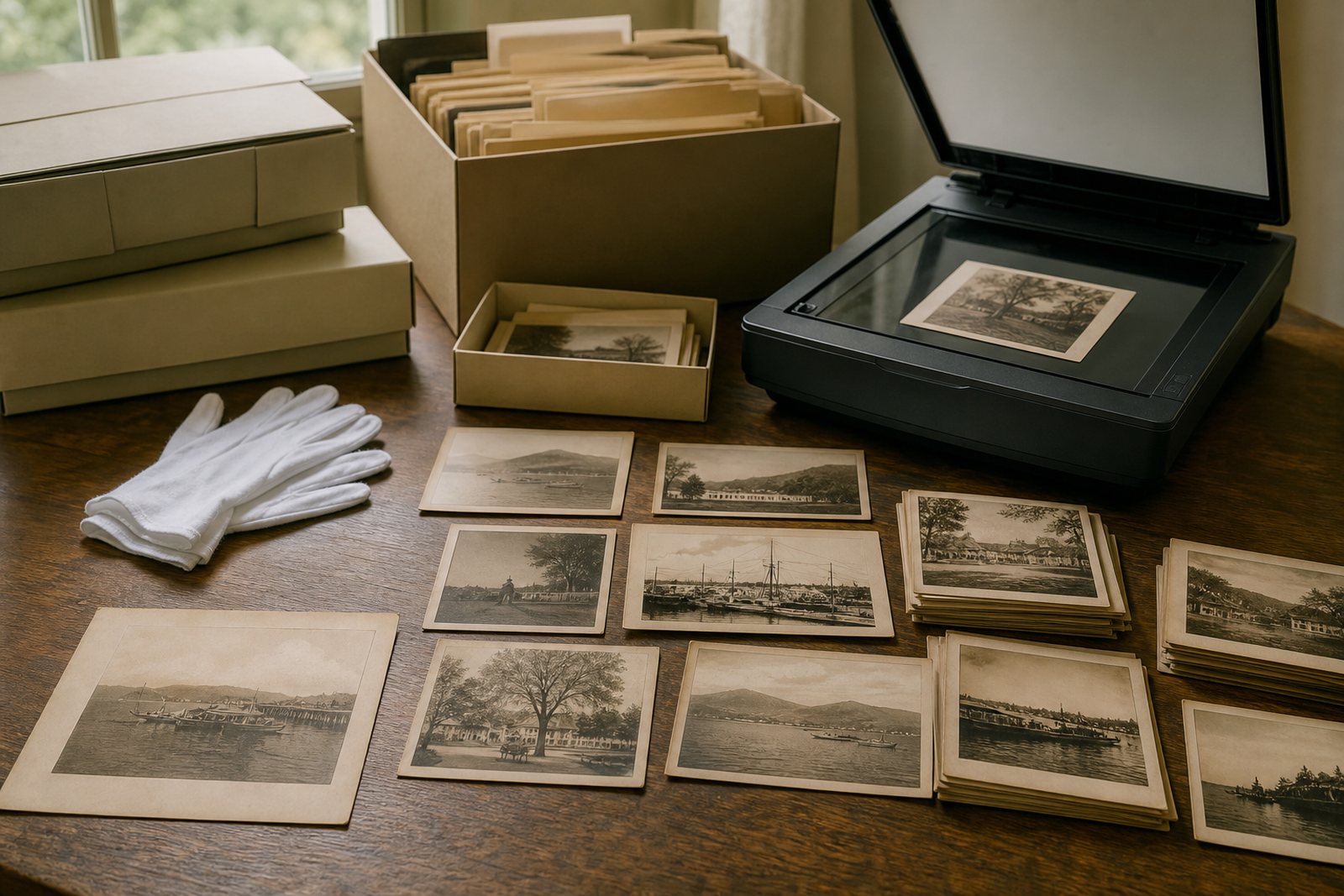
Archival boxes, cotton gloves, sorted vintage photographs and a flatbed scanner arranged on a table in warm daylight
Batch 07, container 3, ready for the scanner

What is inside

Built around containers, batches, people and dates

Six things carry the weight of a photo organizing practice. Every one of them was drawn from watching real projects run, not from a generic project management template.

Container inventory with photo proof

Every box, album, envelope and carousel gets a number, a photograph and a count on the day it arrives. The signed intake sheet prints from the same record, so the client agrees to the scope in writing.

Scanning batches with rescan queues

Batches record the container, the operator, the resolution and the file count, and flag any gap between expected and received sheets. Failed frames go to a rescan queue that stays visible until it is cleared.

Reusable person records

Add Grandma Ruth once and she is available across every album, slide tray and negative sleeve in the family. Relationships, maiden names and nicknames all resolve to one person in the finished index.

Honest dating, including circa ranges

Record an exact date when the back of the print gives you one, and a range or a decade when it does not. Every date carries a confidence note, so nobody inherits a guess dressed up as a fact.

Shareable family index

Publish a private index the adult children can search by person, decade or place, with links that expire on a date you set. The same record exports as a print booklet for the relatives who prefer paper.

Client hours and project profitability

Time logs attach to containers and batches, so you can see which parts of a job actually pay. Quote the next slide project from your own numbers instead of from a hopeful estimate.

Who it fits

Built for the practice, not for a hobby shelf

PaperKeepsake is used by organizers who bill for this work and answer to families who trust them with irreplaceable material.

Independent organizers

You carry four to six live projects and quote each one yourself. The container inventory and time log give you the numbers to stop underquoting slide trays.

Studios with scanning help

An assistant runs the flatbed while you sort. Batch ownership and per batch permissions mean the handoff is written down instead of shouted across the room.

Estate and downsizing work

Nine containers, three heirs, one deadline set by a closing date. Reconciled counts and expiring index links keep every sibling looking at the same record.


What changes in the practice

Numbers our organizers report after two full projects

These come from anonymized project records across 412 accounts, measured from the first project opened in the system to the fourth one closed.

31%

Less time per thousand prints

Because batch state, container state and rescan status are visible at a glance, the hunting time between tasks collapses. The sorting itself takes exactly as long as it always did.

$1,840

Recovered per year, per organizer

Index assembly and reconciliation stop being unbilled evening work. On a practice closing eighteen projects a year, that is more than a full week of capacity back.

2.4x

More referrals from finished families

A searchable index gets forwarded to siblings and cousins in a way a hard drive never does. Each published archive carries your studio name and a way to reach you.

0

Containers unaccounted for at handoff

Counts reconcile against the signed intake sheet before a project can be marked complete. If a sleeve of negatives is still open, the system will not let the job close quietly.


From the trade

Organizers who stopped keeping the project in their head

I took on an estate with nine containers and 6,400 prints, which two years ago would have wrecked my fall. Batches kept the scanning honest and the rescan queue caught 61 frames I would have shipped crooked. The daughter searched her father's name and cried, which is the whole job.

Deborah Whitfield Owner, Cedar Lane Photo Archives, Asheville, North Carolina

We run three organizers and a part time scanner, and the handoff between us used to be a group text. Now the batch says who touched it and at what resolution. I have not rescanned a container by accident in fourteen months.

Marisol Aguirre Studio Director, Keeping Room Memory Studio, Tucson, Arizona

The person records are what sold me. My clients name faces faster than I can type, and having Aunt Bernice exist once across four albums means the index is finally worth reading. My delivery week went from six days to two.

Janine Kowalczyk Founder, Northside Family Archives, Milwaukee, Wisconsin
412US practices running projects here
1.9MPhotographs catalogued to date
97%Projects closing with a reconciled count

Pricing

Priced per organizer, never per photograph

A nine container estate costs the same to run as a single wedding album. You should never hesitate to scan one more sleeve because of what the software will charge you.

Solo Organizer

$25 per month

For the independent organizer running her own book of client work.

  • One organizer seat
  • Unlimited client archive projects
  • Container inventory with photo proof
  • Scanning batches and rescan queues
  • Person and date tagging with IPTC and XMP write back
  • Family index, web and print booklet
  • Email support answered within one business day
Request a walkthrough

Team

$125 per month

For multi organizer practices handling estates and institutional collections.

  • Up to twelve organizer seats
  • Everything in Studio
  • Subcontractor accounts scoped to single batches
  • Bulk import of legacy project spreadsheets
  • Documented API and webhook delivery events
  • Retention rules and audit trail per project
  • Named onboarding contact for the first two projects
Request a quote

Every plan is billed monthly in US dollars and can be cancelled at any time from your account settings. No setup fee, no per photograph charge, and your catalog exports in full whenever you ask for it.


Archival standards

The catalog follows the practices the field already agreed on

Your records should outlive the software that holds them. Everything here is written in formats an archivist twenty years from now can still open.

  • Descriptive metadata written as IPTC Core and XMP, embedded in the file itself
  • Dates recorded with a confidence note, so a range never hardens into a false fact
  • Container, batch and frame numbers carried through every export as plain CSV
  • Derivative files named to a consistent, human readable pattern you control
  • Full catalog export available at any time, with no request and no waiting period

Questions organizers ask first

Straight answers before you book anything

Plans are priced per organizer seat, not per photograph, so a large estate collection costs the same to run as a single album. Solo Organizer is $25 per month, Studio is $59 per month, and Team is $125 per month. Every plan carries unlimited client projects, unlimited scan batches and unlimited tags. Billing is monthly and you can cancel from your account settings whenever a season slows down.

The Archive Table

Working notes from the magazine

Working knowledge for professional photo organizers and memory keeping studios who handle other families' original prints, slides and film.

Read every article in The Archive Table

Book a walkthrough

Bring one real project and we will set it up with you

Tell us about a job on your table right now, the messier the better. In thirty minutes we open the project together, log the containers and show you what the first batch looks like on your own material.

  • No slide deck, just your containers on the screen
  • We answer storage and access questions in plain terms
  • You keep the project record whether or not you subscribe
  • Replies come from a person who has run these projects

One reply from a real person, usually within one business day. Prefer to skip the form and describe the shoeboxes in your own words? Email jimenezjulien42@gmail.com.