trends and outlook
Is bulk scanning still worth building my studio around, or should I sell organizing instead?
Bulk scanning competes with cheap mail in services and phone cameras. A look at where the durable margin sits, and how studios are shifting toward decisions, metadata and delivery.

Build the studio around organizing, and keep scanning as the door people walk through. Bulk scanning is a capacity business competing against mail in operations with industrial feeders and against a phone in every client's pocket that copies a print in two seconds. You will not win on price per image, and you should stop trying.
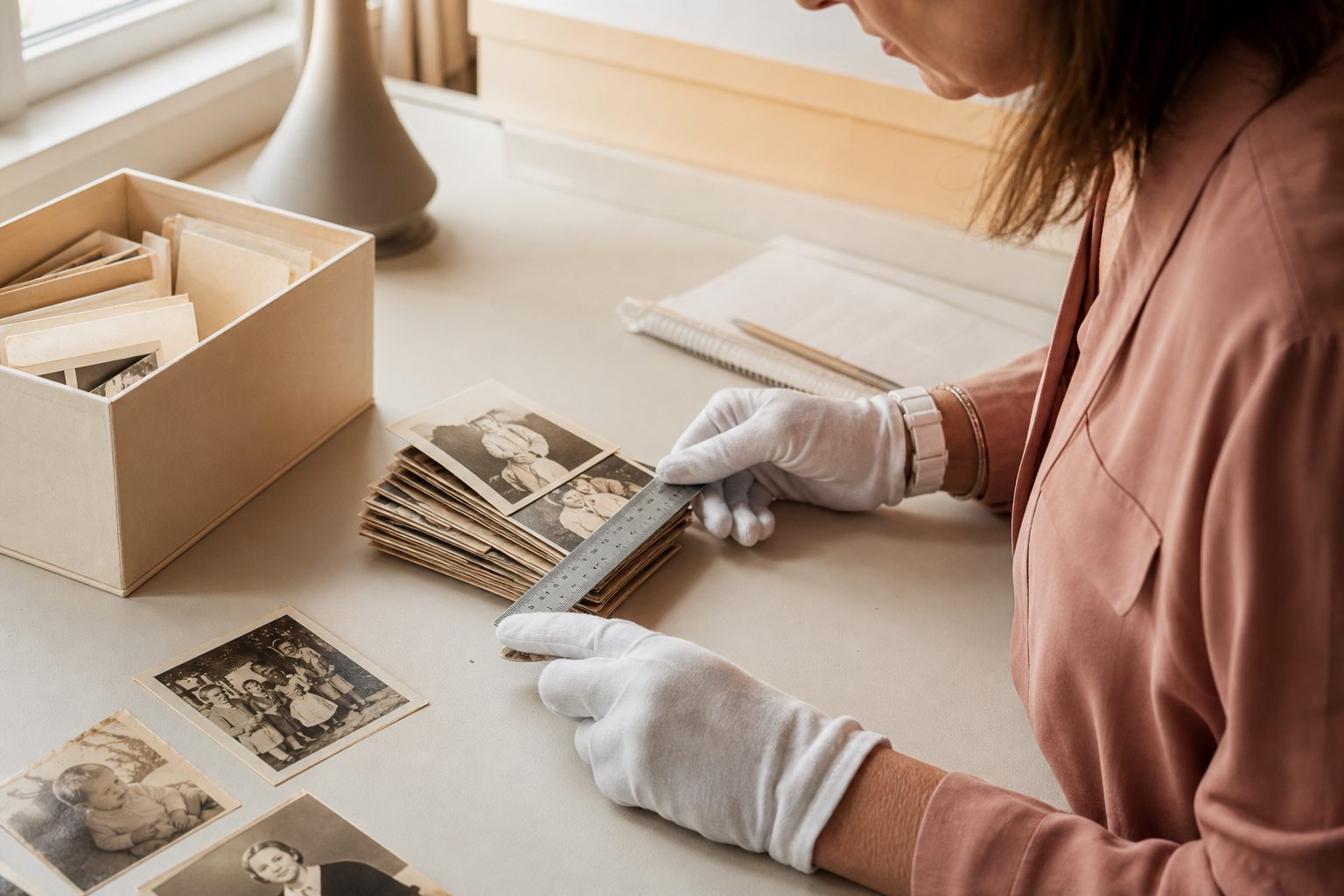
What you can win on is everything scanning does not do. A folder of 6,000 files named by scanner sequence is not an archive. Someone has to cull the near duplicates, put dates on unlabeled prints, attach names to faces, decide what the family actually wants findable, and deliver it in a form a 78 year old and a 24 year old can both open. That work is judgment, it happens in conversation, and it does not commoditize.
None of which means abandoning your scanners. It means changing what you sell, how you price it, and what the first invoice is for.
What commodity scanning prices do to a local studio's margin
Run the arithmetic on your own numbers rather than trusting anyone's assertion, including this one. Here is the shape of it with stated assumptions.
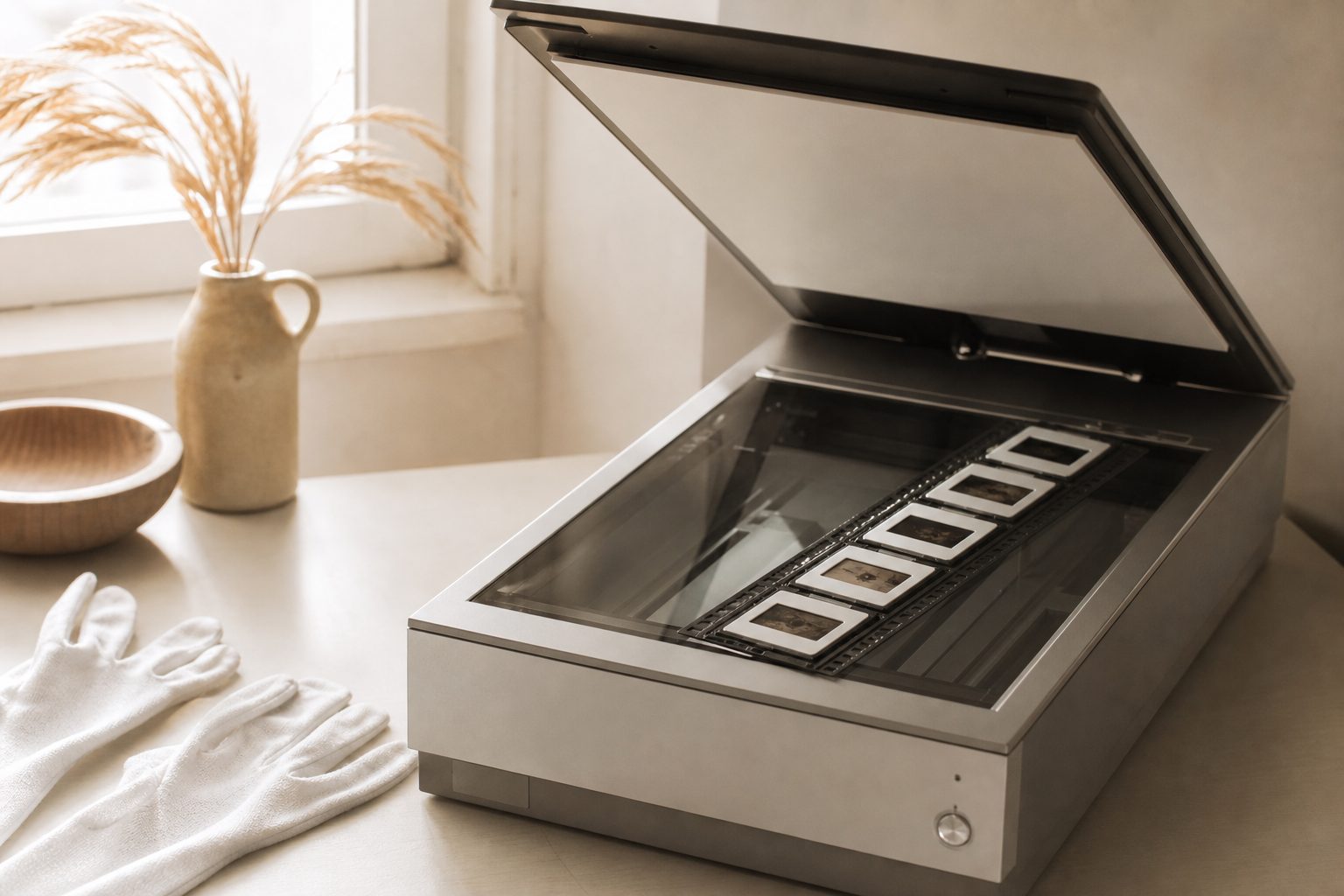
Assume a flatbed workflow producing a finished, cropped, quality checked image at 200 prints per hour on mixed sizes, which is realistic for consumer loose prints with some handling. Assume a fully loaded labor cost of 25 dollars an hour for a trained operator, and allocate 5 dollars an hour for equipment, space and software. That is 30 dollars an hour, or 15 cents per image in direct cost, before intake, client communication, packaging or shipping, and before any owner profit.
Now price against a mail in service quoting somewhere in the range of 20 to 40 cents per print at volume. Your gross margin at 30 cents is 15 cents an image. At 2,000 images, a substantial job, that is 300 dollars of contribution for a full day of scanning plus the intake and delivery work around it.
Those figures are illustrative assumptions, not measured industry data. Substitute your real throughput and your real loaded labor rate and the conclusion tends to survive: per image pricing on straightforward loose prints does not build a business, it fills time.
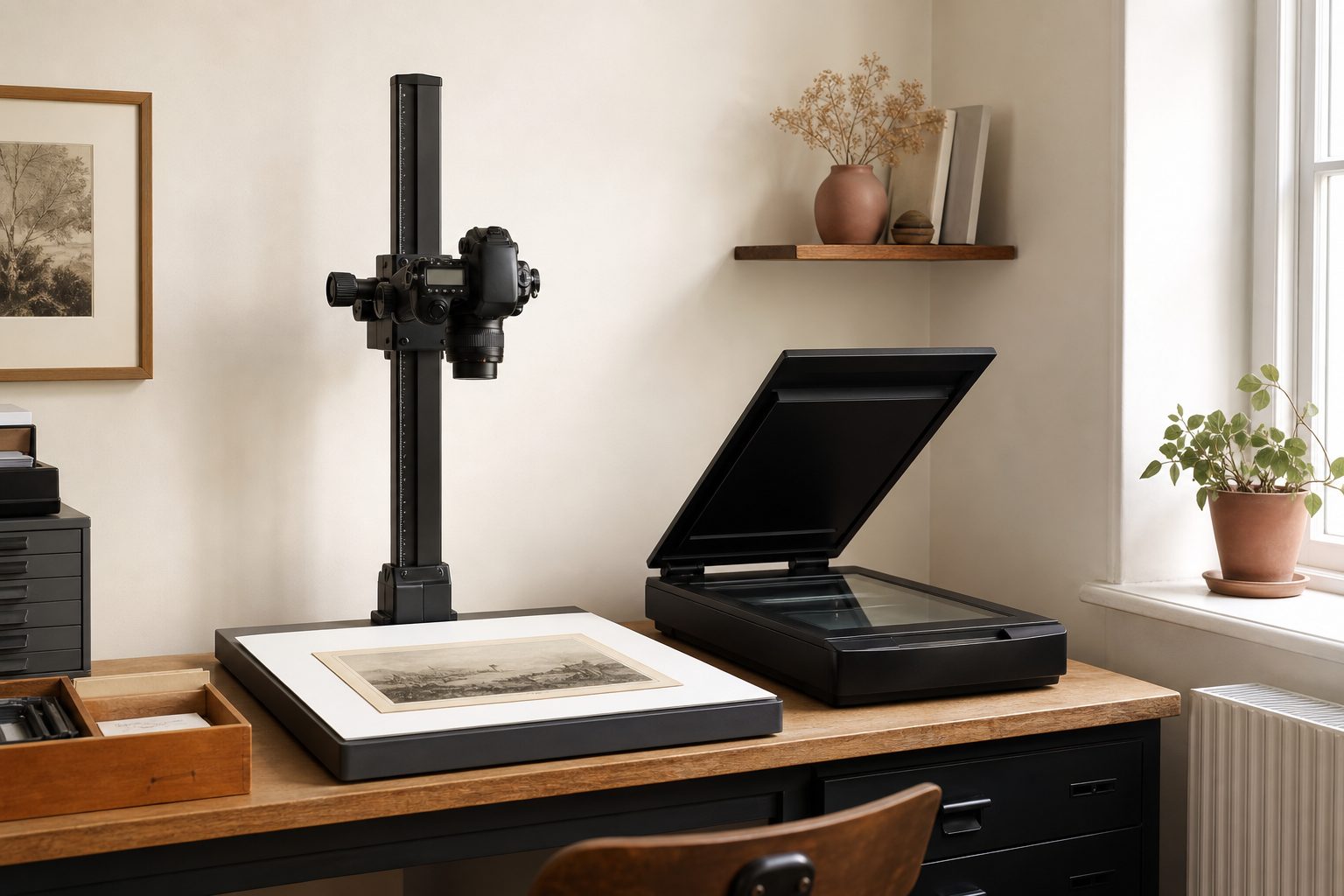
Where scanning does earn its keep is on material the mail in services will not touch or will damage: blocked stacks, adhesive albums, oversized panoramas, glass plates, fragile film, boxes with no order at all. Difficulty is your moat, not volume.
Keep reading: How do I price a shoebox scanning project when I have no idea how many photos are inside?
The work that does not commoditize: culling, dating, naming, deciding
Consider a 4,000 image collection. Scanning is roughly twenty hours. The rest of the job, done properly, often exceeds it.
- Culling. Consumer collections routinely carry 20 to 40 percent near duplicates, blank frames, blurred shots and processing errors. Deciding what goes is judgment plus a conversation, and it is the single change that most improves how the finished archive feels to use.
- Dating. Print backs carry processing codes, borders and paper stamps change by era, cars and clothing date a scene to a few years, and envelope order preserves sequence. This is detective work no automated tool does reliably on unlabeled material.
- Naming. Face recognition can cluster. Only a living relative can tell you the cluster is Great Aunt Ruth, and only you can capture it while she is in the room saying it.
- Deciding. What gets printed, what gets shared with which sibling, what stays private, what the wall of the 90th birthday party looks like.
Every item on that list is billed by the hour or by the project, and none of it has a mail in competitor.
Digital collections as the growing half of the job
Most new clients no longer arrive with only shoeboxes. They arrive with shoeboxes and with 40,000 phone photos, three old laptops, a dead external drive, a Facebook account holding the only copy of a decade, and two cloud services quietly billing them.
The digital side is worse than the paper side in one specific way: it has no natural end. Prints stop. The camera roll does not. That is exactly why it supports ongoing work rather than one time projects.
What the digital engagement actually contains
- Inventory every device, account and drive, and write down where the only copy of anything lives.
- Consolidate into one authoritative library instead of six partial ones.
- Deduplicate, which on a merged multi device library commonly removes a meaningful share of the total.
- Fix dates, because scanned images and transferred files often carry the file creation date rather than the capture date and sort into the wrong decade.
- Establish a real backup: three copies, two media types, one off site.
- Teach a maintenance habit the client can actually keep.
Sell this as a fixed scope assessment first. It is a small, low risk purchase that produces a written finding, and it is the most reliable path into a larger project.
Keep reading: What resolution should I actually scan family prints and slides at for a client archive?
Estate and downsizing work as a referral channel
Two moments in a family's life create urgent, unavoidable photo work: a parent dies, or a parent moves out of the house they lived in for forty years. Both have a hard deadline, which is what turns interest into a signed contract.
The referral sources are specific and reachable. Senior move managers who empty a house on a schedule. Estate liquidators who need photographs and documents out before an auction. Estate attorneys and fiduciaries. Realtors specializing in seniors. Hospice social workers, approached with care.
What these partners want from you is not marketing. It is reliability under time pressure: you can be there Thursday, you take the material away in labeled containers, you return originals on a stated date, and you never create a problem in an already difficult week. Build one relationship well and it produces work for years.
Video, audio and mixed media as capability gaps you can fill
Most families have a shelf nobody has touched: VHS, Hi8, MiniDV, cassettes, reel to reel, 8mm and Super 8 home movies. Nearly every household has some. Very few local providers handle it, and the client cannot self serve because the playback equipment left the market.
You have two routes. Bring capability in house, which means acquiring and maintaining decks and learning transfer properly, or build a vetted partner and handle intake, project management and delivery yourself at a markup you disclose. The second is the right answer for most studios. Owning the client relationship and the finished archive matters more than owning the deck.
Either way, add the question to your intake script. Asking every client what is on the shelf finds work that was never going to be requested unprompted.
See how PaperKeepsake handles this for memory keeping and photo organizing services
Recurring revenue: maintenance plans and annual backup reviews
Project work means starting from zero every January. A modest recurring layer changes the shape of the year.
| Plan | What the client gets | Rough annual price band |
|---|---|---|
| Backup review | One annual check that all three copies exist and restore, plus a written report | 150 to 300 dollars |
| Quarterly tidy | New photos imported, dated, tagged and filed into the existing structure four times a year | 600 to 1,500 dollars |
| Managed archive | Ongoing custody of the master library, monthly upkeep, family index kept current, priority scheduling | 2,000 dollars and up |
Those bands reflect what small studios commonly charge and are offered as a starting frame, not a benchmark. Price against your own hours.
The honest pitch is a restore test. Most clients have never verified that their backup works. Doing that once a year, and putting the result in writing, is a service with an obvious value and a very small delivery cost.
Building a service menu where scanning is the entry point, not the product
Restructure the menu so the first purchase is small, defined and easy to say yes to, and the archive work follows from what it uncovers.
- Assessment, fixed fee. Two hours on site or by video. You inventory the physical material, survey the digital, note condition problems, and deliver a written plan with a scope and a price. Charge for it. Free assessments attract people who will not buy.
- Rescue batch. One box or one album, scanned, dated, named and delivered inside two weeks. This is the proof of concept and it is where scanning belongs on the menu.
- Full archive project. Priced by project or by session, not per image. This is the core engagement: capture, cull, date, tag, index, deliver.
- Legacy pieces. Books, curated sets, anniversary presentations, narrated video. Highest margin, and it is the deliverable the family shows other people.
- Maintenance. The recurring layer above, offered at delivery while the client is happiest.
Notice what moved. Per image pricing appears once, on the rescue batch, sized as a sample rather than as the business. Everything above it is priced on outcome.
Where to start this quarter
Pick one change. Put a paid assessment at the front of your sales process, or add a backup review to every project you deliver between now and December. Either one shifts revenue away from throughput and toward judgment, which is the direction the work is going regardless of what you do.
The delivery side has to keep up, because an outcome priced project is only worth what the family can find in it later. PaperKeepsake is built around that: client archive projects that hold their scanning batches, date and person tags, and a shareable family index, so what you hand over is searchable by the people it belongs to. Set up your next project there and price it on the archive, not on the image count.